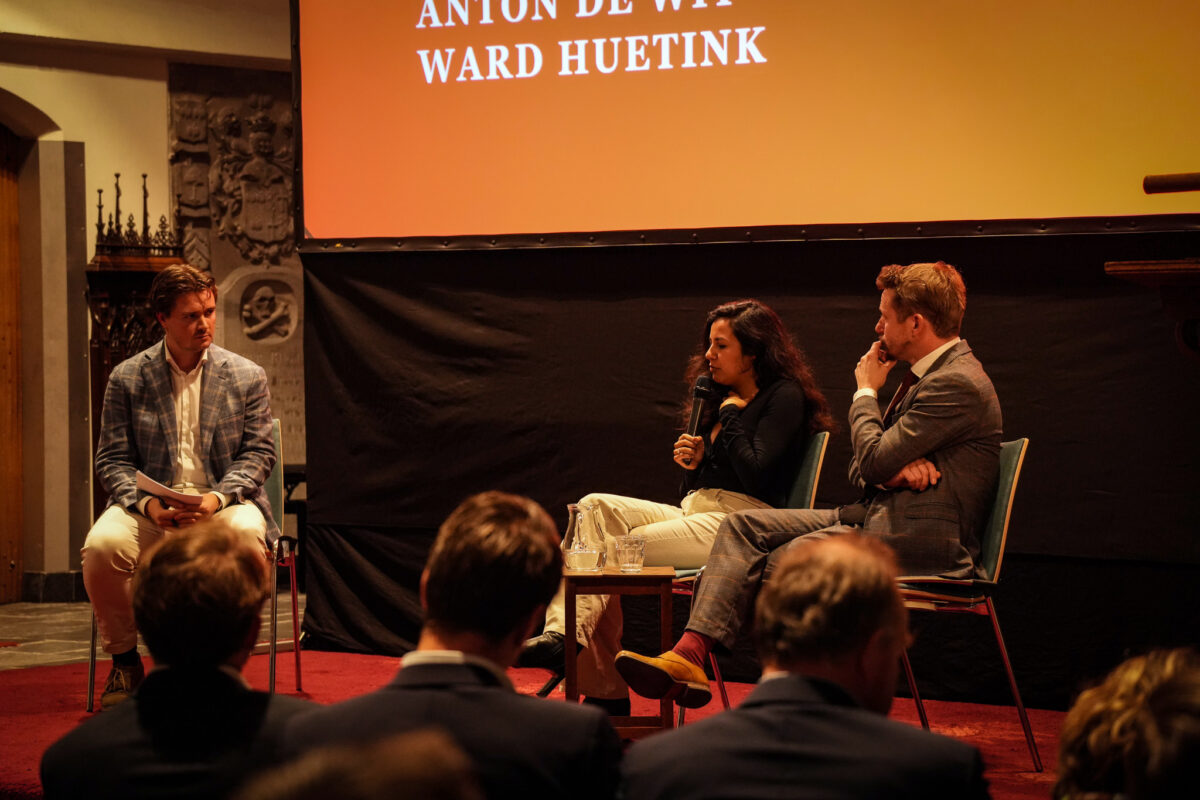
Last Friday found The Fenomeen Charlie Kirk place in the Monastery Church, about the attraction of Charlie Kirk, online culture and traditionalism among young people with opening by ds. Fulco Timmers and introductions by Talitha Muusse and Anton de Wit. The eponymous first issue of our new magazine Cahier was presented by Frank van den Heuvel, and the first copies were handed over to the speakers.
Young people find their examples and form their religious and political opinions online. How can preachers, teachers and youth workers still engage in the conversation, when views already seem deeply anchored? The conversation about a new traditionalism should take place at school, in the church and at the kitchen table, where people meet.
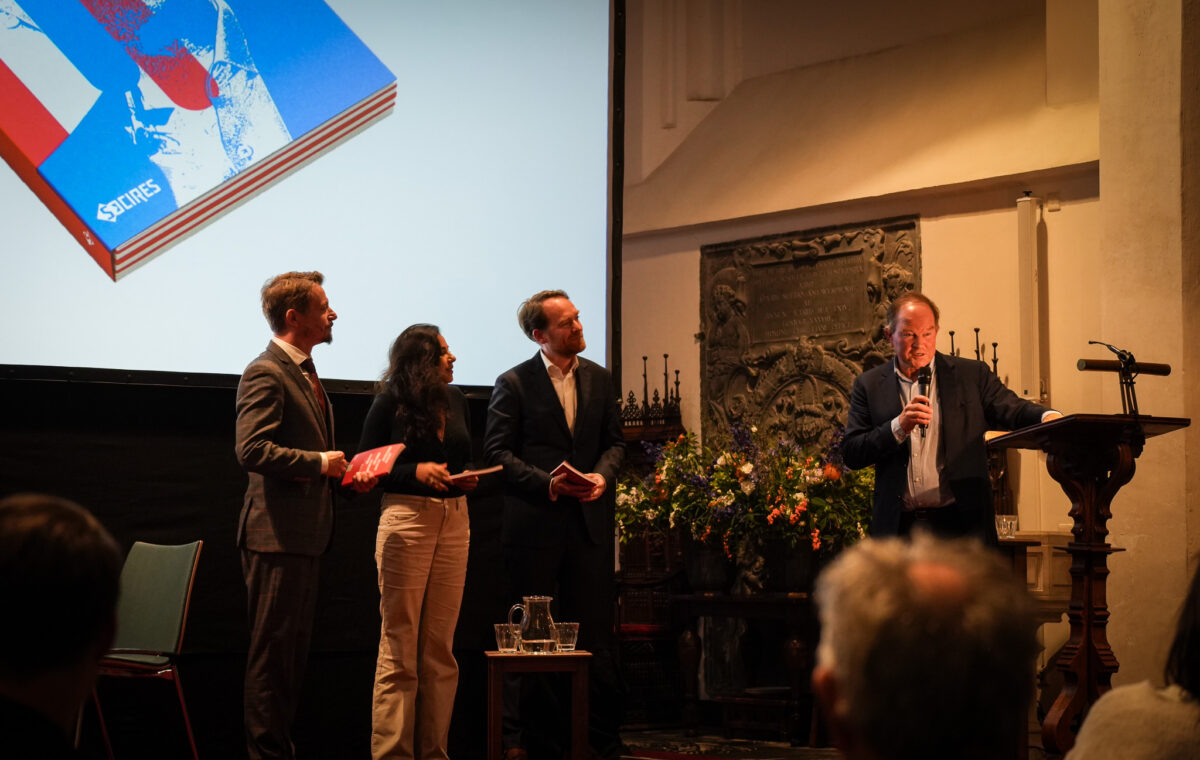
Frank van den Heuvel, editor, presents Cahier #1, Het Fenomeen Charlie Kirk.
Fulco Timmers, as minister at the Monastery Church, opened the evening and discussed the complex relationship between Kirk's rhetoric and the Christian message. Charlie forced Kirk to confess to colour, whereas those churches had just decided not to be aware.
Moderator Ward Huetink spoke in his introduction about the gorge: know older churchgoers Charlie Kirk hardly, but for many young people his videos were a first encounter with faith. And when, after his murder, people met him after his death, the verdict was quick. bad, but that doesn't explain his attraction and doesn't give room to young people where their ideas are taken seriously — and contradicted where necessary.
Ward Huetink in conversation with Talitha Muusse and Anton de Wit
Talitha Muusse talked about Kirk's appeal to Gen Z. As a millennial from a secular Rotterdam, she had the idea for a long time to be embarrassed by her political and religious beliefs. She notes that young conservatives who no longer have that embarrassment but guide and clarify what good life pertains to are self-confident, which can sometimes turn into a hardness, a "heartless conservatism" as Muusse called it. Charlie Kirk was a bridge figure, a late millennial, which started the conversation, but also fell into that same hardness.
Anton de Wit calls church and society to have the awkward conversation. Just when it's difficult or exciting. Over the past decades he has noticed how the older generation (partly) put the tradition to the dirt, but that the new generation embraces something strange. Tradition is exactly "the passing of fire, not the worship of ashes." The risk in the new generation is the last. According to De Wit, the key lies in promoting the uncomfortable conversation between generations. Why do young people at Kirk find more answers than Augustine or Chesterton?
The conversation begins with listening, says De Wit, and curiosity about the younger world, not an immediate condemnation, adds Muusse. Young people with conservative or orthodox ideas are not a "problem" but are looking for direction in their lives. In conversation with the audience, De Wit therefore advises ministers and teachers not to fall into great ideological discussions but to emphasize the human side in contact: a sincere interest in the young person's life.
The evening was an exercise in the conversation. We like to continue with pastors, teachers, elders and deacons. We like to think along. Please contact our colleague if you are interested Ward Huetink.
We thank the Monastery Church for their hospitality and cooperation in organising this important conversation.